Is SoftWave Therapy Safe? Myths, and What to Expect
SoftWave Therapy has quickly become one of the most trusted non-invasive treatments for pain relief and tissue healing. With more people seeking SoftWave therapy in Long Island than ever before, it’s natural to wonder: how safe and effective is this treatment? The good news: SoftWave Therapy is scientifically backed, FDA-cleared, and clinically proven.
This treatment allows thousands of patients to recover faster—without injections, surgery, or downtime. In this blog, we’ll explore why SoftWave Therapy is considered safe, debunk common myths, and explain what to expect during your first session.
Everything You Need to Know About SoftWave Therapy
The Science Behind SoftWave Therapy
SoftWave Therapy uses unfocused, low-intensity acoustic waves to stimulate the body’s natural healing responses. These sound waves penetrate deep into tissues, increasing blood flow, reducing inflammation, and activating the body’s own repair mechanisms.
Scientific studies show that SoftWave Therapy triggers mechanotransduction, a process where mechanical stimulation from sound waves prompts cellular activity. Research demonstrates that this stimulation enhances mesenchymal stem cell release, boosts collagen production, and accelerates tissue regeneration.
Proven Safety: What Medical Research Confirms
SoftWave Therapy is FDA-cleared to improve blood circulation, reduce inflammation, and repair tissue. Unlike high-intensity shockwave devices, SoftWave disperses energy broadly, making treatments more comfortable while remaining clinically effective.
Clinical studies confirm that the therapy has no serious side effects and does not harm healthy tissue. Mild sensations during treatment, often described as brief tapping or pressure, indicate that the device is targeting damaged tissue—an entirely normal and safe response.
Debunking Common Myths
Despite its growing popularity, misconceptions still exist:
- Myth: SoftWave Therapy is painful.
Fact: Unlike old-style shockwave machines, SoftWave devices use low-intensity waves, creating a gentle experience for nearly all patients. Any brief discomfort usually occurs only when the device passes over damaged tissue, which can actually help clinicians identify problem areas. - Myth: SoftWave Therapy is only for athletes.
Fact: While professional sports teams often use this therapy, it’s equally effective for anyone experiencing chronic pain, mobility issues, tendon injuries, or age-related tissue degeneration. - Myth: Results take months to appear.
Fact: Many patients notice improvement after the very first session, with continued healing over the following weeks.
Who Benefits Most from SoftWave Therapy?
SoftWave Therapy is ideal for those seeking non-invasive, safe solutions for pain, inflammation, and tissue damage. Commonly treated conditions include:
- Plantar fasciitis
- Knee pain
- Shoulder injuries
- Tendonitis
- Neuropathy
- Muscle strain
- Joint stiffness
Because SoftWave stimulates the body’s natural healing processes, it’s especially beneficial for patients looking to avoid surgery or reduce reliance on pain medication. Older adults, active individuals, athletes, and injury recovery patients all benefit.
Note: SoftWave may not be recommended for pregnant patients, those with severe blood disorders, or individuals with certain implanted medical devices.
What to Expect During Your SoftWave Session
A typical SoftWave session is simple, comfortable, and completed in under 15 minutes.
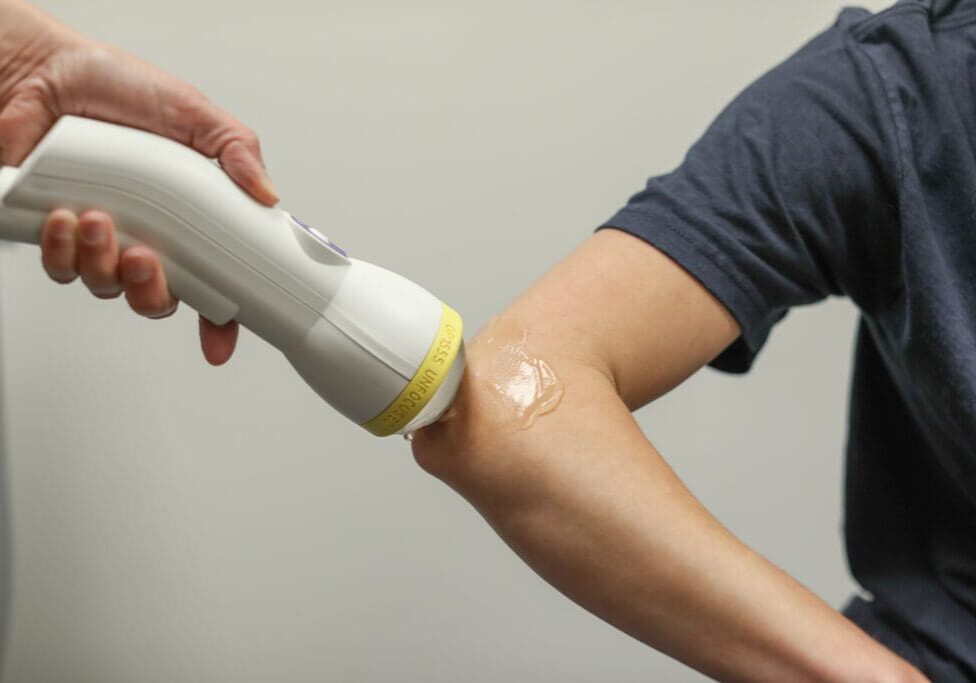
- Preparation: Your practitioner applies a conductive gel to the treatment area to transmit sound waves efficiently.
- Treatment: The SoftWave device is moved across the targeted region, delivering controlled acoustic pulses. Most patients feel light tapping sensations, adjustable for comfort.
- Post-Treatment: There is no downtime—patients can resume daily activities immediately. Many notice increased mobility, reduced pain, and overall relief after the first session. Long-term results continue as the body naturally heals over several weeks.
A Safe, Science-Backed Path to Healing
Among regenerative therapies, SoftWave Therapy stands out as safe, effective, and non-invasive. For those seeking SoftWave therapy in Long Island, the science, safety data, and patient outcomes make one thing clear: this therapy is a positive, long-term solution for pain relief and tissue healing.
If you’re ready to reduce pain and restore mobility naturally, contact SoftWave today to schedule your session.