
The Science of how Mechanotransduction Triggers Healing
📖 Introduction
Have you ever wondered how your body knows how to heal itself? Whether it’s a sprained ankle or a strained tendon, your body has built-in systems to sense damage and start the repair process. One of the most fascinating of these systems is called **mechanotransduction** — a big word for a simple idea: turning movement and pressure into healing.
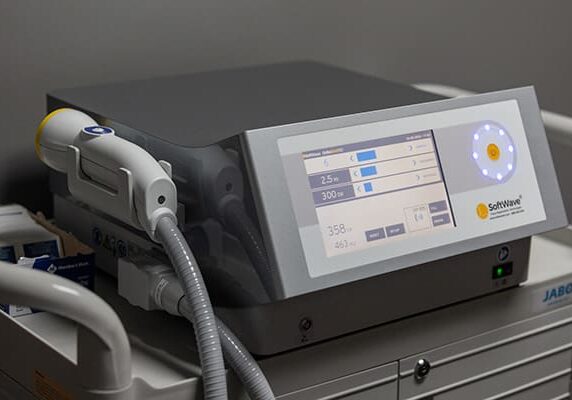
SoftWave Therapy takes advantage of this natural process by using gentle acoustic (sound) waves to wake up your cells and get them working on repairs. In this article, we’ll explain how it works, why it’s effective, and what science says about it—all in plain, clear language.
🧬 What Is Mechanotransduction?
Mechanotransduction means that your body turns physical forces—like stretching, pressure, or vibration—into chemical signals that tell your cells what to do. Think of it like a switch: when you press on certain cells in your body, they “turn on” processes that help fix tissues, grow new cells, or reduce inflammation.
These mechanical forces are sensed by special parts of your cells, such as:
*Stretch sensors in the cell membrane
*Proteins that connect the inside of the cell to the outside
*The cell’s skeleton (cytoskeleton)
When these parts detect movement or pressure, they send messages inside the cell that can lead to things like:
* Creating new proteins (like collagen)
* Calling in healing cells (like stem cells)
* Repairing or strengthening damaged tissue
In short: move the right way—or apply the right kind of pressure—and your body will respond with healing.
Springer Article- (https://link.springer.com/article/10.1007/s40141-020-00306-z),
PMC Article- (https://pmc.ncbi.nlm.nih.gov/articles/PMC2662433/),
PubMed Study- (https://pubmed.ncbi.nlm.nih.gov/20505115/))
🦴 How It Helps Bones and Connective Tissues Heal
Bones, tendons, and ligaments are all responsive to mechanical force. When you apply the right type of pressure—like what happens in physical therapy or with SoftWave Therapy—these tissues respond by healing faster and stronger.
What the Science Shows:
**Study:** Mechanotransduction in bone repair and regeneration* by Huang C. et al. (2010) – *FASEB Journal* ([PubMed](https://pubmed.ncbi.nlm.nih.gov/20505115/))
-Mechanical pressure tells bone and connective tissue cells to activate repair systems.
-It helps guide stem cells to become bone-building cells.
So whether it’s a stress fracture or chronic tendon pain, stimulating your body’s own repair system with pressure and movement can make a big difference.
💥 How SoftWave Therapy Uses Mechanotransduction
SoftWave Therapy uses sound waves—not heat, needles, or drugs—to deliver a gentle mechanical stimulus to injured areas. These waves are strong enough to reach deep tissue, but gentle enough to avoid damage. This triggers the body’s natural repair response.
Here’s what happens:
-New blood vessels grow- to improve circulation.
-Inflammation is reduced naturally.
-Stem cells and other healing cells are activated and sent to the injury.
**Study:** *Shock wave as biological therapeutic tool* by Rutz & Radetzki (2020) – *EFORT Open Reviews* ([PubMed](https://pubmed.ncbi.nlm.nih.gov/26612525/))
-This study showed that mechanical sound waves (like those used in SoftWave) stimulate healing and reduce inflammation.
**Study:** *Biological effects of shockwave therapy on tendons* by Schneider et al. (2013) – *Muscles, Ligaments, and Tendons Journal* ([PubMed](https://pubmed.ncbi.nlm.nih.gov/23738271/))
-This Study demonstrated that shockwave therapy improves tendon repair by encouraging new cell growth and collagen production.
🔬 Why It Works: The Big Picture
SoftWave Therapy taps into what researchers call “regenerative rehabilitation.” This means combining movement and mechanical stimulation with therapies that enhance the body’s own healing powers.
**Study:** *Regenerative Rehabilitation: The Role of Mechanotransduction* by Glatt V. et al. (2019) – *Journal of Orthopedic Research* ([PubMed](https://pubmed.ncbi.nlm.nih.gov/30561813/))
-This confirmed that combining mechanical forces with modern medicine accelerates recovery.
This is why athletes, post-surgical patients, and everyday people with stubborn pain are using SoftWave. It’s safe, drug-free, and works *with* your body—not against it.
✅ What Conditions Can It Help?
SoftWave Therapy has shown benefits for:
* Tendon injuries (shoulder, elbow, knee, ankle)
* Plantar fasciitis
* Osteoarthritis
* Bone bruises or slow-healing fractures
* Nerve pain
And because it stimulates healing at the cellular level, many people report long-term relief—not just temporary symptom control.
🧠 Final Takeaway
Mechanotransduction is a fancy term for how your body turns pressure into healing. SoftWave Therapy uses this natural system to treat pain, injuries, and inflammation without drugs or surgery. And it’s all backed by science.
Want to know if SoftWave can help you? Reach out to SoftWave Long Island to schedule a consultation and learn more.
🧾 Sources
Here are the real, verifiable studies behind everything we discussed:
1. **Huang C, Ogawa R. (2010)** – *Mechanotransduction in bone repair and regeneration* – *FASEB Journal*. [PubMed](https://pubmed.ncbi.nlm.nih.gov/20505115/)
2. **Rutz AL, Radetzki F. (2020)** – *Shock wave as biological therapeutic tool* – *EFORT Open Reviews*. [PubMed](https://pubmed.ncbi.nlm.nih.gov/26612525/)
3. **Notarnicola A, Moretti B. (2012)** – *The biological effects of extracorporeal shockwave therapy on tendon tissue* – *Muscles Ligaments Tendons Journal*. [PubMed](https://pubmed.ncbi.nlm.nih.gov/23738271/)
4. **Tomazoni SS, et al. (2023)** – *Mechanome‑Guided Strategies in Regenerative Rehabilitation* – *Current Opinion in Biomedical Engineering*. [PubMed](https://pubmed.ncbi.nlm.nih.gov/38586151/)
5. **Glatt V, Evans CH, Stoddart MJ. (2019)** – *Regenerative rehabilitation: The role of mechanotransduction* – *Journal of Orthopaedic Research*. [PubMed](https://pubmed.ncbi.nlm.nih.gov/30561813/)
—